
Nightguards in Edina, MN

Enhance Your Oral Health With Nightguards

Do you find yourself grappling with nighttime teeth grinding or clenching, waking up with discomfort in your jaw, headaches, or teeth showing signs of wear? At Mint Dental in Edina, MN, we offer customized nightguards in Edina, MN, designed to alleviate these prevalent dental concerns. Explore the benefits of nightguards and how they can not only safeguard your dental health but also enhance your overall quality of life. Experience the relief and protection that our nightguards can provide.
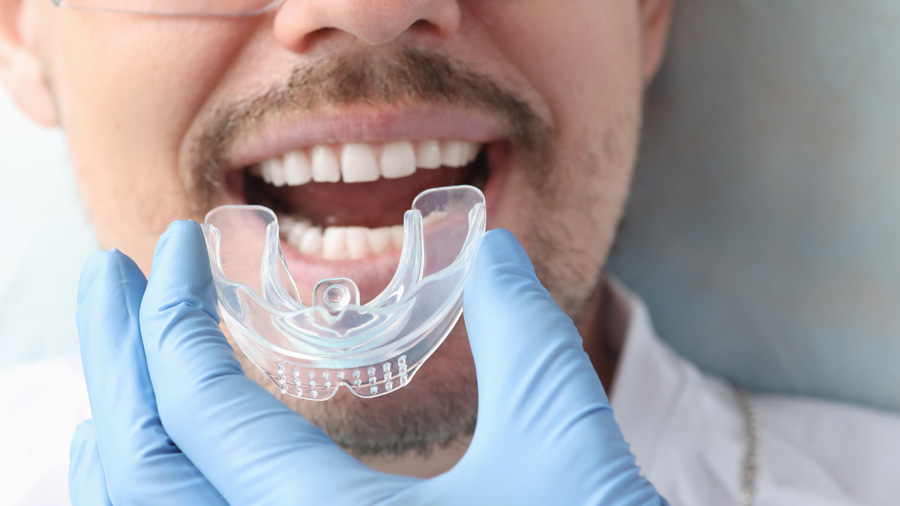
dental mouthguard

Understanding Nightguards

Nightguards, alternatively referred to as dental splints or occlusal appliances, are tailor-made oral devices meticulously crafted for nighttime wear. Their primary purpose is to serve as a protective shield, effectively cushioning your teeth and preventing them from making contact with each other during instances of clenching or grinding while you sleep. These nightguards are typically constructed from top-notch, long-lasting materials and custom-fitted to guarantee maximum comfort and efficacy in protecting your dental health.

The Importance of Nightguards

Nightguards offer several crucial benefits for individuals who suffer from bruxism (teeth grinding) or temporomandibular joint (TMJ) disorders:

Prevent Tooth Damage

The excessive forces generated during teeth grinding can lead to tooth wear, fractures, and even tooth loss. Nightguards act as a protective barrier, safeguarding your teeth from these damaging effects.

Relieve Jaw Pain

Bruxism and TMJ disorders often cause jaw pain, headaches, and facial discomfort. Nightguards help alleviate these symptoms by reducing the pressure on your jaw joints.

Improve Sleep Quality

Teeth grinding can disrupt your sleep and that of your partner. Nightguards provide a solution, allowing both you and your loved ones to enjoy a peaceful night’s sleep.

Preserve Dental Work

If you have dental restorations like crowns or veneers, nightguards can extend their lifespan by protecting them from the excessive forces of grinding.

Custom-Fitted Nightguards in Edina at Mint Dental

At Mint Dental, we understand that every patient is unique, and one-size-fits-all solutions may not be enough. That’s why we offer custom-fitted nightguards tailored to your specific needs:

During your initial visit, our skilled dentist will assess your oral health and discuss any symptoms or concerns you may have related to teeth grinding or TMJ issues.

We’ll take precise impressions of your teeth to create a nightguard that fits comfortably and securely.

Your nightguard will be meticulously crafted in our state-of-the-art dental laboratory to ensure a perfect fit.

Once your nightguard is ready, we’ll make sure it fits comfortably and make any necessary adjustments to ensure optimal comfort and effectiveness.

The Benefits of Nightguards 

Nightguards offer a range of benefits that can significantly improve your sleep quality and overall oral health:

Teeth Protection

Nightguards act as a cushion, preventing your teeth from grinding against each other, which can lead to wear, fractures, and sensitivity.

Pain Relief

If you suffer from jaw pain, headaches, or facial discomfort due to bruxism or TMJ, nightguards can provide relief by reducing stress on your jaw joints.

Improved Sleep

Nightguards promote better sleep by reducing disturbances caused by teeth grinding, allowing you and your partner to rest peacefully.

Prevention of Dental Issues

By protecting your teeth and alleviating stress on your jaw, nightguards help prevent the need for more extensive dental treatments in the future.

Signs You May Need a Nightguard

If you are encountering any of the following signs, it’s possible that you might need a nightguard for dental protection: Do you often start your day with headaches or a sore jaw? These can be telltale signs of nocturnal teeth grinding or clenching. Also, if you’ve noticed that your teeth seem to be wearing down, appearing flattened, chipped, or even fractured, it could be a consequence of grinding your teeth while you sleep. Another indicator can be an increase in tooth sensitivity, often a result of enamel erosion from persistent grinding. If your dental restorations, like fillings or crowns, are inexplicably damaged, this too might be attributed to the stress placed on them during teeth grinding. 

Lastly, if your sleep is frequently interrupted, or if your partner notices grinding noises coming from your side of the bed, it’s a strong indication that you’re grinding your teeth at night. All these symptoms are common for those who suffer from bruxism, a condition where one unconsciously grinds or clenches their teeth, particularly during sleep, and for which a nightguard can offer significant relief and protection.

Caring for Your Nightguard

To ensure your nightguard remains effective and durable, it’s essential to maintain proper care:

  1. Regular Cleaning – Clean your nightguard daily with a mild soap and water solution to prevent bacteria buildup.
  2. Storage – Store your nightguard in its protective case when not in use to protect it from damage or contamination.
  3. Regular Check-ups – Schedule regular dental check-ups to ensure your nightguard continues to fit correctly and provide the protection you need.

Get Relief and Protect Your Smile with Nightguards in Edina

Don’t let teeth grinding or TMJ disorders compromise your oral health and quality of life. At Mint Dental, Edina, MN, we are committed to helping you find relief and protect your teeth. Contact us today to schedule a consultation and take the first step toward a more comfortable and healthier night’s sleep. Our custom nightguards are designed to safeguard your smile and improve your overall well-being. Trust Mint Dental for your oral health needs.

Nightguards FAQs

Frequently Asked Questions About Nightguards

Common signs include waking up with jaw pain, headaches, or sore facial muscles, plus tooth sensitivity or teeth that look flattened, chipped, or worn. A partner hearing you grind at night, or clicking sounds in your jaw when you chew, are two more clues worth mentioning to a dentist. Ignoring these can lead to cracked teeth and worn enamel over time, and a dentist can spot wear patterns you can’t see yourself. Stress, an uneven bite, and sleep disorders are common triggers, so bring those up too. If the underlying issue is jaw related, TMJ treatment may be part of the plan alongside a nightguard.

Custom nightguards molded to your teeth generally offer better fit, durability, and protection than boil-and-bite or stock drugstore guards. They’re made from stronger materials, distribute pressure evenly across your bite, and are less likely to slip out or wear through quickly, though they cost more upfront. Over-the-counter guards can work as a very short-term test if you suspect grinding but aren’t sure, but they wear down faster and may not fit well enough to actually prevent tooth damage. A poorly fitting guard can shift teeth over time or worsen jaw discomfort, which is why dentists recommend a custom-fit version for anyone grinding regularly.

You can often wear a standard nightguard with sleep apnea, but it depends on your specific setup, so talk to both your dentist and your sleep physician first. Some CPAP masks and traditional nightguards conflict, and in certain cases a specialized dental sleep appliance is a better option than a separate guard. If you use a CPAP, mention it before your dental fitting so the guard can be shaped to work alongside your mask. Some patients benefit from a mandibular advancement device that addresses grinding and mild sleep apnea in one appliance, but that’s a separate treatment your dentist and sleep doctor should coordinate. Never stop CPAP therapy on your own to accommodate a nightguard.

Most custom nightguards last around three to five years with proper care, though heavy grinders may need a replacement sooner, sometimes every one to two years. Lifespan depends on the material, since softer guards wear faster than hard acrylic, and on how forcefully you grind and how well you clean and store the appliance. Bring your nightguard to routine dental visits so your dentist can inspect it for cracks, thinning, or worn spots. Don’t wait until it cracks through completely, because a compromised guard can allow damage to the teeth you were trying to protect in the first place.

Rinse your nightguard with cool water right after taking it out, then gently brush it with a soft toothbrush and mild soap or a non-abrasive cleanser. Store it dry in the ventilated case it came in, away from heat, pets, and direct sunlight, and give it a deeper clean once a week with a denture or retainer cleaner. Skip toothpaste on the guard, since it’s abrasive and creates tiny scratches where bacteria collect. Never use hot water or leave the guard in a hot car, because heat warps the material and ruins the fit. Bring it along to your routine cleaning visits so your dental team can inspect it and give it a thorough professional cleaning.

Yes, nightguards are generally safe for children and teenagers who grind their teeth, but the approach differs from adults because kids’ teeth and jaws are still growing. Many children outgrow grinding on their own, so a dentist may recommend monitoring first and fitting a guard only if the grinding is causing pain, wear, or sleep disruption. Growing mouths mean any guard needs regular refitting, sometimes every six to twelve months, or it can start to interfere with normal jaw development. A dentist who sees your child regularly through family dentistry can tell whether the grinding is a passing phase or something worth treating and rule out other causes like earache or a misaligned bite.

A nightguard mostly protects your teeth from the damage of grinding rather than stopping the grinding itself. Some people do grind less over time because the guard changes how their jaw rests, but the core purpose is to absorb pressure so your teeth, fillings, and crowns don’t take the hit. If stopping the grinding is the goal, your dentist may also look at underlying causes like stress, jaw alignment, sleep quality, or TMJ dysfunction. Combining a nightguard with TMJ treatment, better sleep habits, or stress management often works better than the guard alone. Track your morning symptoms so your dentist knows whether the plan is working.

A nightguard is designed to absorb the slow, steady pressure of nighttime grinding and clenching, while a sports mouthguard is built to absorb sudden impact during physical activity. They’re made from different materials, sit differently in your mouth, and are not interchangeable, so using one for the wrong purpose leaves your teeth underprotected. Sports mouthguards are usually thicker and more shock-absorbent because they’re built for one hit at a time. Nightguards are thinner but denser, made to last through hours of consistent pressure night after night. If you both grind at night and play contact sports, ask your dentist about getting one of each rather than trying to double up on a single appliance.

Mint Dental fits custom nightguards at our Edina office at 7550 France Avenue South, Suite 138, and you can call 952-831-1332 or book a consultation online to get started. Look for a general dentist who offers custom impressions and follow-up fitting adjustments, not just an over-the-counter guard sold at the front desk. When comparing providers, ask whether the guard is made from hard, soft, or dual-laminate material, whether the impression is digital or traditional, and how follow-up adjustments are handled. A dentist who already sees you for cleanings has an advantage, because they know your bite history and can spot new wear during routine visits. Same-office follow-up also makes it easier to fix any tight spots after the fitting.

Some tightness or awkwardness during the first week is normal as your teeth and jaw adjust to a new nightguard, but sharp pressure, sore spots, or waking up with more pain than before is not. Give it three to five nights before deciding, then contact your dental team for an adjustment if discomfort persists. Small tight spots are usually fixable in a short in-office appointment where the dentist trims or reshapes a specific area, and you don’t need a whole new guard. Wearing it consistently rather than skipping nights actually helps your mouth adjust faster. If the guard causes tooth soreness that lasts through the day or a persistent headache, stop wearing it and call the office to be seen.
